


 Be Inspired
 Roller Fabrics
 Vertical Fabrics
 Roman Fabrics





Blog Post
Child Safety Standards For Commercial Window Blinds
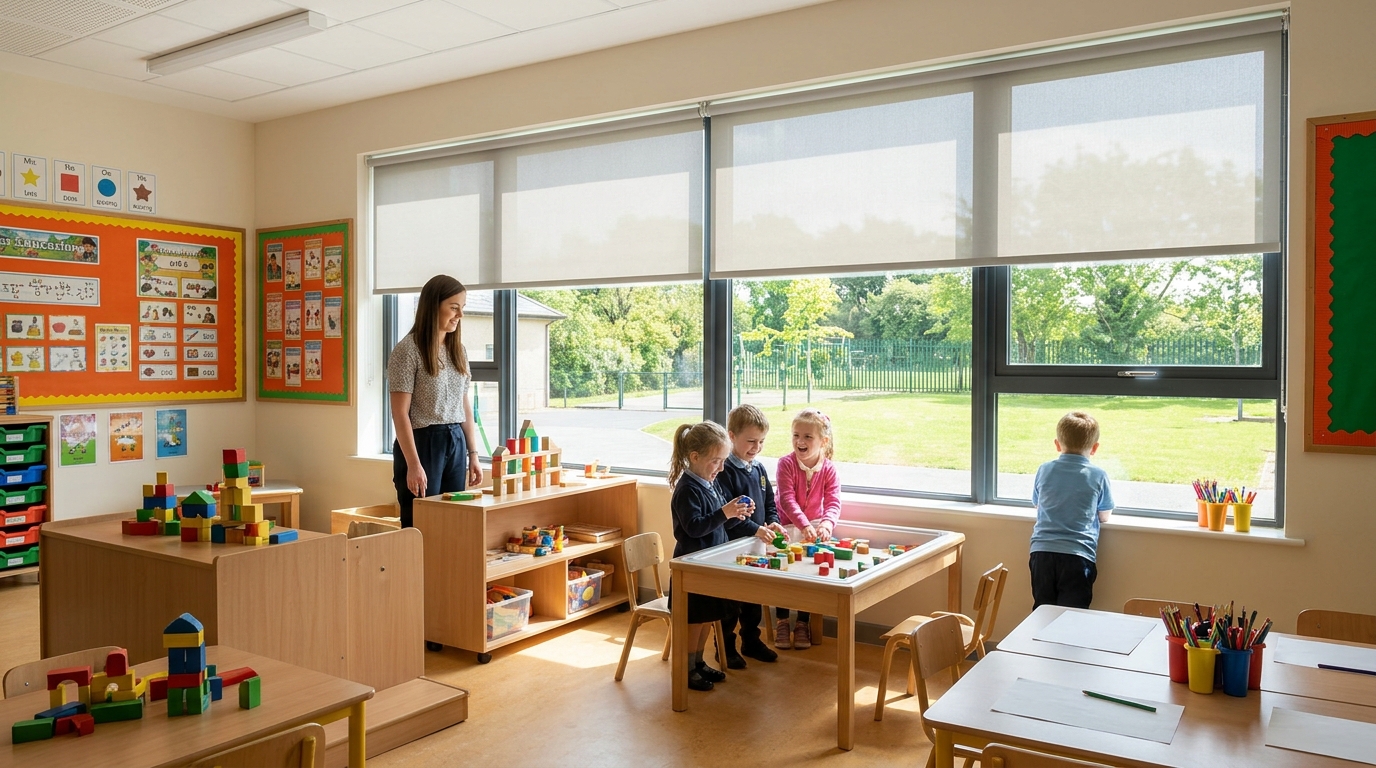
Nov
Why Child Safety Must Come First When Choosing Commercial Window Blinds
Protecting Children, Meeting European Safety Standards and Choosing the Right Commercial Window Blinds for Schools, Childcare Facilities and Businesses in Ireland
When selecting window blinds for commercial premises, appearance, durability, light control and price are important considerations. However, where children may be present, one responsibility must always take priority: safety.
Window blinds are installed in thousands of commercial buildings throughout Ireland, including schools, crèches, childcare facilities, hospitals, medical practices, community centres, hotels, restaurants and offices. Although they provide valuable privacy, light management and temperature control, certain blind operating mechanisms can introduce serious safety hazards if they are not correctly designed, selected, installed and maintained.
One of the most significant risks associated with traditional window blinds is strangulation caused by accessible operating cords, chains and internal cords. Children, particularly babies and toddlers, may become entangled in these mechanisms without an adult immediately recognising the danger.
For commercial property owners, school management teams, childcare operators, architects, contractors and facilities managers, understanding the relevant European safety standards is therefore essential when specifying or purchasing commercial window blinds.
At Grays Window Blinds, we believe that choosing the right window coverings should involve more than selecting an attractive fabric or colour. It should also involve understanding the product, its operating mechanism, its intended environment and the safety considerations associated with its installation.
Established in 1991, Grays Window Blinds provides made-to-measure domestic and commercial window blinds, with an extensive online product range available throughout Dublin and the Republic of Ireland.
This guide explains the importance of child safety standards, the European standards governing internal window blinds, the dangers associated with operating cords and chains, and how businesses can make more informed decisions when purchasing commercial window blinds.
Understanding European Child Safety Standards for Commercial Window Blinds
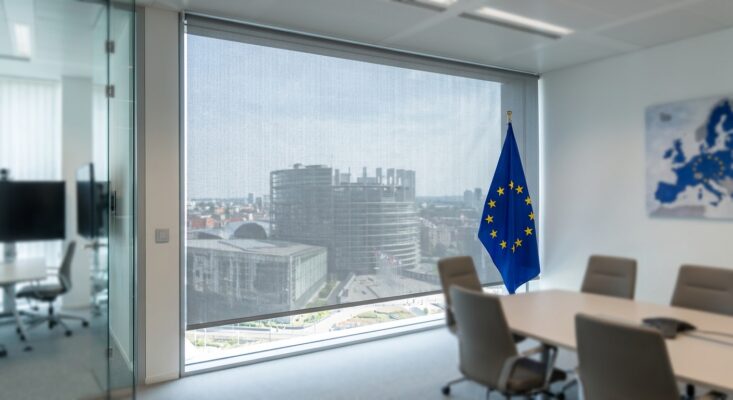
European safety requirements have significantly changed the way internal window blinds are designed, manufactured and supplied.
The principal standards associated with internal blind safety are:
- EN 13120:2009+A1:2014 – Internal blinds: Performance requirements including safety.
- EN 16433:2014 – Internal blinds: Protection from strangulation hazards – Test methods.
- EN 16434:2014 – Internal blinds: Protection from strangulation hazards – Requirements and test methods for safety devices.
These standards address different aspects of window blind safety and should be considered together when specifying products for commercial premises.
1. EN 13120:2009+A1:2014 – Internal Blind Safety Requirements
EN 13120 is the principal European product standard covering the performance and safety requirements of internal window blinds.
It applies to various types of blinds, including:
- Roller blinds.
- Vertical blinds.
- Venetian blinds.
- Roman blinds.
- Pleated blinds.
- Honeycomb blinds.
- Panel blinds.
- Plantation shutters.
- Other specified internal blind systems.
The standard addresses hazards associated with the construction, installation, operation and maintenance of internal blinds.
An important aspect is the prevention of strangulation hazards associated with accessible cords and operating mechanisms.
For commercial customers purchasing made-to-measure window blinds, it is important to establish whether the products being specified are designed to meet the applicable safety requirements.
A blind should not be selected solely because it fits the window or complements the interior. Its operating system and suitability for the intended environment must also be considered.
2. EN 16433:2014 – Protection from Strangulation Hazards
EN 16433 establishes test methods for evaluating the protection provided by internal blinds against strangulation hazards.
The standard helps determine whether a blind’s design and operating arrangements adequately address potential hazards associated with cords and loops.
This is particularly important for traditional chain-operated roller blinds, vertical blinds and other products incorporating operating cords.
A continuous loop chain, for example, can create a potential entanglement hazard if it is accessible to a child.
Testing under the relevant standard helps establish whether the blind design provides the required level of protection.
3. EN 16434:2014 – Safety Devices and Protection Systems
EN 16434 addresses the requirements and test methods associated with safety devices designed to reduce strangulation risks.
Depending on the blind’s design, these may include:
- Chain tensioning devices.
- Cord and chain retaining systems.
- Breakaway connectors.
- Cord accumulation devices.
- Safety devices designed to prevent hazardous loops.
- Other approved safety mechanisms.
However, simply having a safety device supplied with a blind is not sufficient.
The correct device must be used, installed in accordance with the manufacturer’s instructions and maintained in its intended operating position.
For commercial premises, facilities managers should also ensure that staff understand the purpose of these devices and do not remove, bypass or reposition them.
Why Operating Cords and Chains Can Be Dangerous
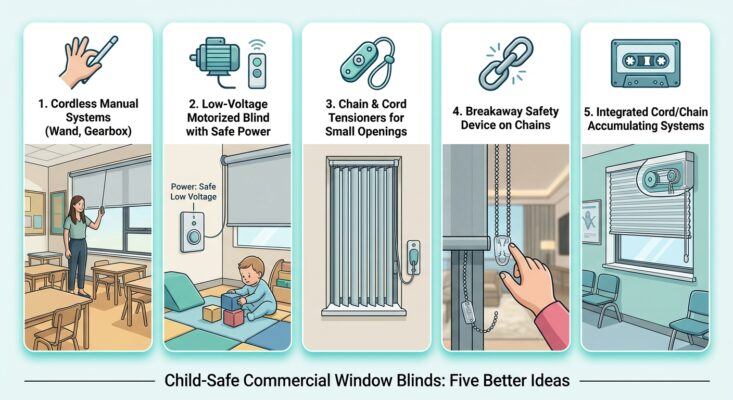
The danger associated with window blind cords is sometimes underestimated because they appear to be ordinary operating components.
However, an unsecured cord or chain can create a serious strangulation hazard.
Young children are naturally curious. They may reach towards hanging cords, pull on chains, wrap them around their hands or necks, or become entangled while playing near windows.
The risk is particularly concerning in environments where children spend extended periods of time, including:
- Crèches and early learning centres.
- Primary schools.
- Special education facilities.
- Children’s hospitals.
- Playrooms and activity centres.
- Community and family resource centres.
- Hotels and accommodation facilities used by families.
Traditional vertical blinds can incorporate continuous operating chains and internal mechanisms. Roller blinds may use looped chains, while Venetian blinds can contain internal lifting cords and tilt mechanisms.
It is therefore important to examine the complete operating arrangement rather than looking only at the visible front of the blind.
A blind that appears to have no accessible operating cord may still contain internal cords or other mechanisms requiring consideration.
The Health Service Executive and the Competition and Consumer Protection Commission both provide guidance highlighting the dangers associated with window blind cords and the importance of appropriate precautions.
Cordless and Motorised Window Blinds: A Better Choice for Child-Focused Environments
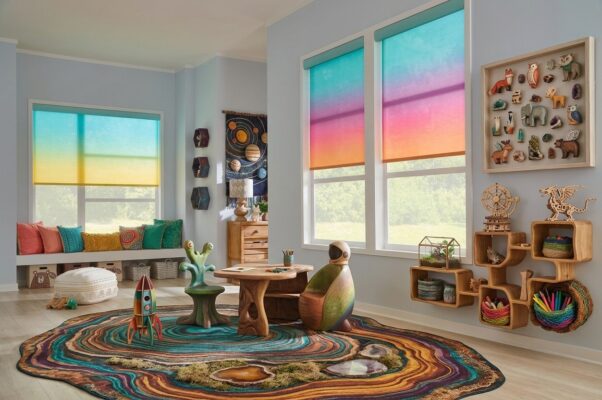
One of the most effective ways to reduce risks associated with accessible operating cords is to specify window blinds that do not rely on exposed cords or chains.
Cordless and motorised operating systems can provide an alternative to traditional chain-operated mechanisms.
For commercial customers, the choice of operating system should be based on the building’s intended use, the age of its occupants, the accessibility of the windows and the operational requirements of the premises.
Motorised Window Blinds
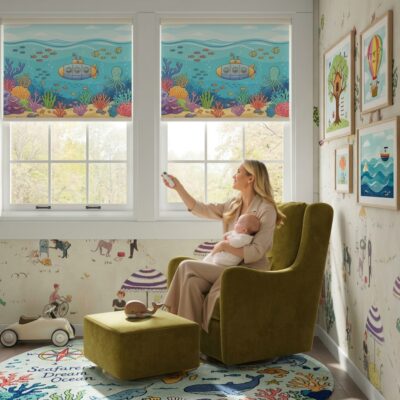
Motorised window blinds are particularly useful in commercial environments where multiple windows need to be operated regularly.
They can be controlled using suitable switches, remote controls or compatible automation systems.
Potential applications include:
- School classrooms.
- Large office windows.
- Conference rooms.
- Healthcare facilities.
- Hotels and hospitality premises.
- Commercial meeting rooms.
Motorised roller blinds can also help simplify the operation of large or difficult-to-reach windows.
However, motorisation should not automatically be treated as proof of child safety. The complete installation must still be assessed, including electrical components, control accessibility and any remaining cords or chains.
Cord-Free Manual Operating Systems

Not every commercial project requires an electrical operating system.
Depending on the product design, alternatives can include spring-loaded mechanisms, gearbox-operated blinds and solid operating wands.
These arrangements can provide practical alternatives to exposed looped cords and chains.
For childcare environments, the Irish Universal Design Guidelines for Early Learning and Care Settings specifically recommend blinds that do not involve cord or chain operating devices.
This is an important consideration when specifying blinds for premises occupied by babies, toddlers and young children.
Choosing Child-Safe Commercial Window Blinds for Different Premises
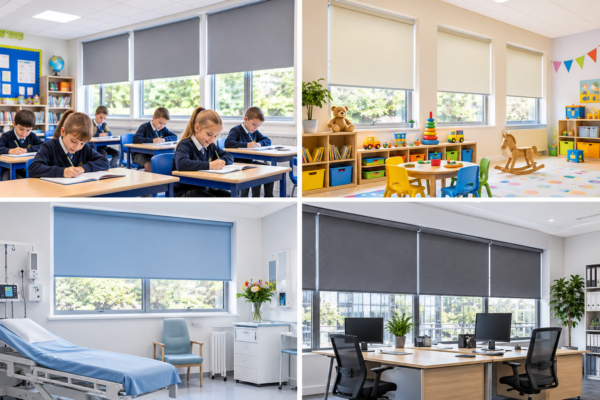
Not every commercial building has the same requirements.
A primary school, medical practice, restaurant and corporate office may all need window blinds, but the appropriate products and operating mechanisms can differ considerably.
1. Commercial Window Blinds for Schools and Classrooms
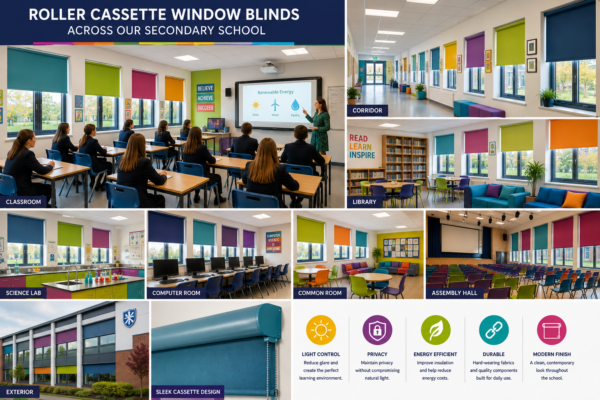
Schools require window coverings that provide reliable light management, privacy and durability.
Classrooms frequently experience changing lighting conditions throughout the day. Teachers may need to reduce glare on interactive screens, control direct sunlight and maintain comfortable working conditions.
Commercial roller blinds are a practical option because they are available in a wide selection of fabrics, including dimout, blackout and light-filtering materials.
Vertical blinds can also provide flexible light control across larger window openings.
For classrooms used by younger children, however, the operating mechanism must receive particular attention.
Where possible, specify suitable cordless or motorised solutions rather than accessible looped operating systems.
2. Childcare Facilities and Crèches

Childcare facilities require especially careful product selection because babies and toddlers may explore their surroundings without fully understanding potential hazards.
The Irish Government’s Universal Design Guidelines for Early Learning and Care Settings state that only blinds that do not involve a cord or chain device are suitable for these environments.
Recommended options include appropriately designed:
- Motorised roller blinds.
- Cord-free roller blinds.
- Spring-operated blinds.
- Gearbox-operated blinds.
- Other suitable systems without cord or chain operating devices.
Existing blinds with accessible cords or chains should be reviewed and replaced where necessary.
For operators planning a new childcare facility or refurbishment, child safety should be incorporated into the original window blind specification rather than treated as an afterthought.
3. Commercial Window Blinds for Offices
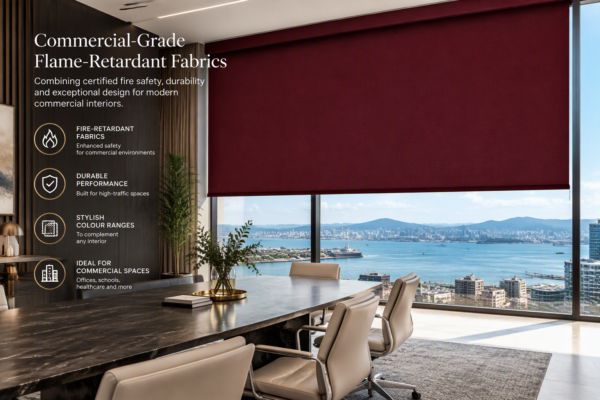
Offices generally require a combination of privacy, glare reduction, temperature management and professional appearance.
Roller blinds, Roller Cassette systems, Dual Shade blinds and Vertical blinds can all provide practical solutions depending on the window configuration.
Roller Dual Shade blinds, for example, combine alternating fabric sections to provide adjustable levels of light filtration and privacy.
Commercial Roller blinds can also be specified in appropriate fabrics for different working environments.
Where children may occasionally visit offices, meeting rooms or reception areas, accessible operating cords and chains should still be considered as part of the premises’ overall safety assessment.
4. Healthcare Facilities and Medical Practices

Healthcare environments require window coverings that are practical, durable and suitable for their particular room functions.
Patient rooms, consultation rooms and treatment areas may have different requirements for privacy and light control.
Commercial roller blinds can offer a clean and straightforward appearance, while suitable blackout fabrics may be appropriate in selected rooms.
The operating system should be selected with patients, visitors, children and staff in mind.
Facilities managers should also consider cleaning requirements, accessibility and the suitability of the fabric for the intended environment.
5. Hotels, Restaurants and Hospitality Premises

Hotels and hospitality businesses frequently accommodate families with young children.
Bedroom windows, restaurant seating areas and shared spaces should therefore be reviewed for accessible cords and chains.
Roller blinds, Roman blinds, Vertical blinds and Venetian blinds can all provide different aesthetic and practical benefits.
The important consideration is ensuring that the chosen product and operating mechanism are appropriate for the location in which they will be installed.
Which Types of Commercial Window Blinds Should Businesses Consider?

Grays Window Blinds offers an extensive selection of made-to-measure window blind products and fabrics for domestic and commercial applications.
Understanding the differences between these products can help commercial customers make more informed purchasing decisions.
Commercial Roller Blinds

Roller blinds remain one of the most versatile window covering options.
Available in plain, textured, printed, dimout, sheer and blackout fabrics, they can be specified for a variety of commercial interiors.
Where child safety is a priority, the operating mechanism should be carefully selected.

Roller Cassette blinds incorporate a cassette housing that encloses the roller mechanism.
They provide a neat, finished appearance and can be particularly attractive in modern offices, commercial reception areas and educational buildings.
The cassette itself does not eliminate operating cord hazards. The operating system must still be assessed independently.
Roller Dual Shade Blinds

Dual Shade blinds use alternating fabric bands to provide adjustable light filtration and privacy.
They are suitable for many contemporary commercial interiors, particularly where occupants want greater control over incoming daylight.
As with other roller systems, the operating mechanism should be specified according to the safety requirements of the premises.
Vertical Blinds and Vertical Louvres
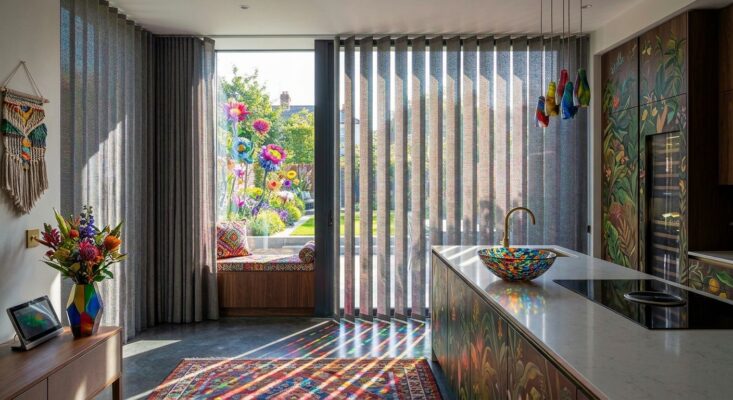
Vertical blinds are frequently used in commercial buildings because they can cover wide windows and allow occupants to adjust the angle of the louvres.
They are particularly useful in offices, meeting rooms and larger glazed areas.
However, traditional vertical blind systems may incorporate operating chains and cords.
Commercial buyers should therefore pay particular attention to the complete operating mechanism and the safety devices required by the applicable standards.
Metal Venetian Blinds
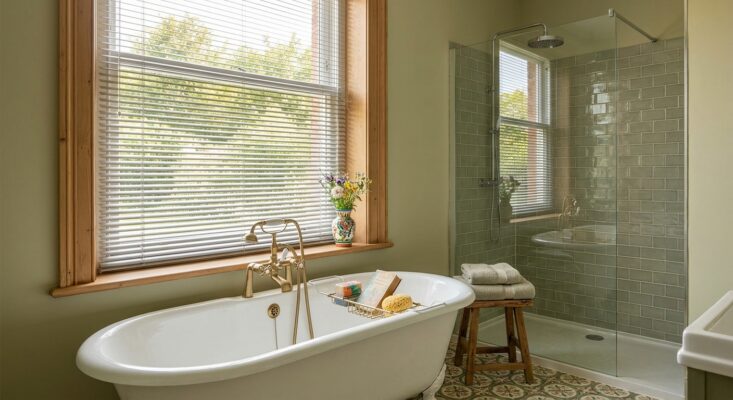
Metal Venetian blinds provide adjustable light control through horizontal aluminium slats.
They are suitable for offices, educational environments and a variety of commercial interiors.
Their internal lifting and tilting mechanisms should be assessed as part of the overall child safety specification.
Faux Wood Venetian Blinds

Faux Wood Venetian blinds offer the appearance of traditional wooden slats with a practical alternative material.
They are available in different slat widths, including 38mm, 50mm and 63mm configurations.
For commercial applications, customers should consider the operating system, accessibility and the intended location before choosing a particular configuration.
Roman Blinds

Roman blinds provide a softer fabric-based appearance and can be specified with blackout lining, cotton lining or interlining.
They are often selected for hospitality, reception and other interior environments.
Because Roman blinds can incorporate operating cords, their suitability for child-focused premises must be assessed particularly carefully.
Roof Window and BlocOut Roof Blinds

Commercial buildings with roof windows may require specialist blinds to manage daylight and glare.
Grays offers BlocOut Roof blind fabric ranges for several established roof window systems, including:
- Velux.
- Dakstra.
- Dakea.
- Fakro.
- Keylite.
- Rooflite.
- Roto.
When selecting roof window blinds, customers should check product compatibility and operating arrangements.
The fact that a blind is installed on a roof window does not automatically remove the need to consider child safety.
The Importance of Correct Measuring, Ordering and Fitting
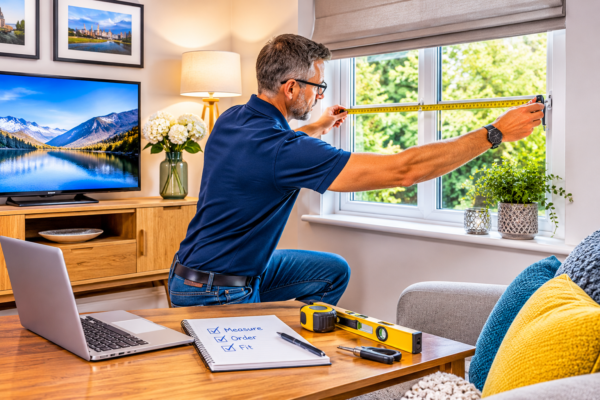
Selecting an appropriate window blind is only one part of creating a safe installation.
Incorrect measuring, unsuitable product selection or improper fitting can compromise the intended performance of a window covering.
Commercial customers purchasing made-to-measure blinds should understand the importance of following the manufacturer’s instructions and using the correct installation components.
For businesses ordering blinds online, the process should begin with identifying the correct blind type and understanding the measurements required.
Step 1: Identify the Window and Blind Type
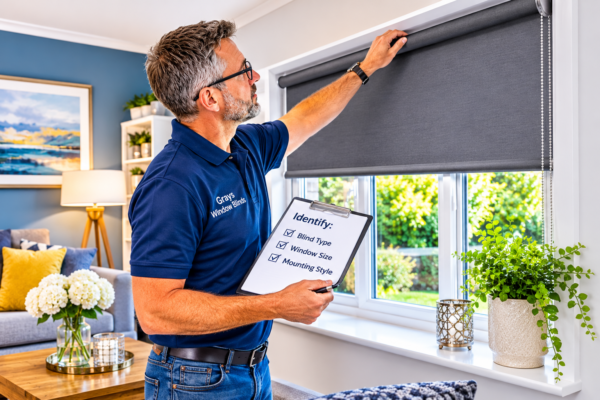
Establish whether the window requires a standard roller blind, cassette system, vertical blind, Venetian blind, Roman blind or specialist roof window blind.
Consider the window dimensions, surrounding fixtures, available fixing surfaces and intended use of the room.
Step 2: Select the Appropriate Fabric

Choose the fabric according to the room’s requirements.
For example:
- Dimout fabrics for reducing incoming daylight.
- Blackout fabrics for rooms requiring greater light exclusion.
- Sheer fabrics for maintaining natural daylight.
- Textured fabrics for decorative commercial interiors.
- Flame-retardant commercial fabrics where the project specification requires them.
Importantly, fabric selection and child safety are separate considerations. A blackout fabric, for example, does not automatically make a blind safer.
Step 3: Check the Operating Mechanism
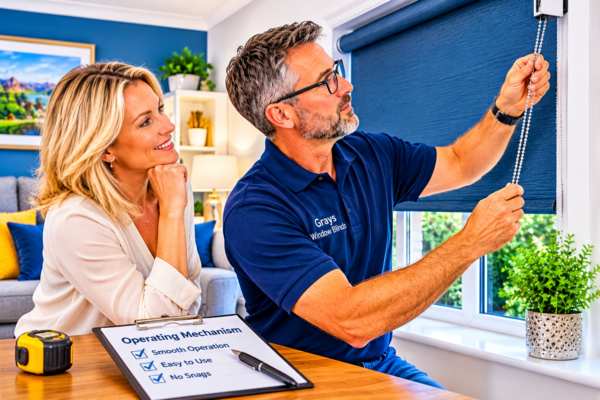
Before placing an order, establish whether the blind uses a cord, chain, spring-loaded mechanism, gearbox, wand or motorised operating system.
Where children may be present, this decision is particularly important.
Step 4: Measure Accurately
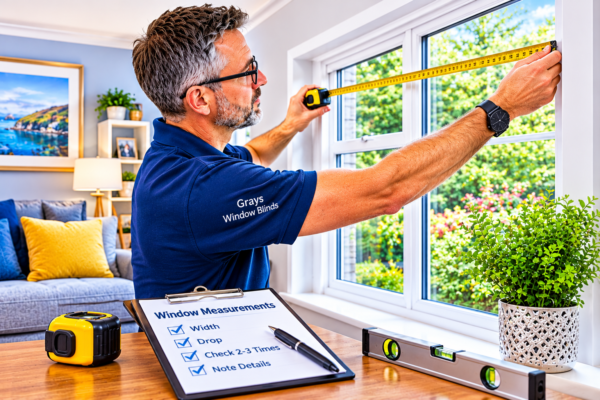
Follow the relevant measuring instructions for the particular blind type.
Check the width and drop carefully and establish whether the blind is being fitted inside or outside the window recess.
For roof window blinds, identify the manufacturer’s window details and compatibility information before ordering.
Step 5: Follow the Comprehensive Fitting Instructions
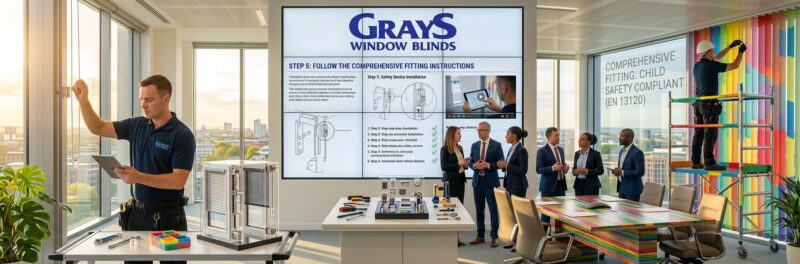
Correct fitting is essential.
Customers purchasing online should read the applicable fitting instructions before beginning installation.
All supplied safety components must be fitted in accordance with the manufacturer’s instructions. Do not omit, modify or remove safety devices.
For complex commercial installations or premises with specific compliance requirements, seek advice from an appropriately qualified installer or competent professional.
Commercial Window Blind Safety: A Practical Inspection Checklist
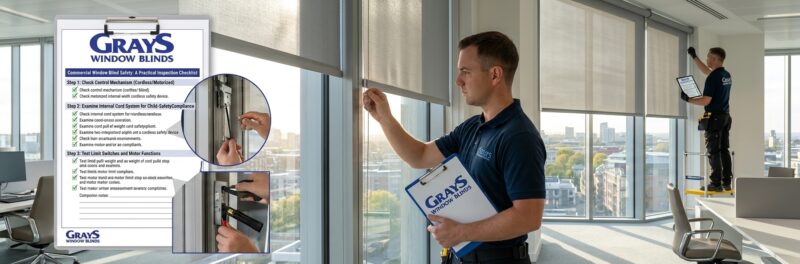
Businesses should not assume that existing window blinds remain safe simply because they were installed several years ago.
Operating mechanisms can deteriorate, safety devices can become loose and changes to room layouts can make previously inaccessible cords reachable.
A regular inspection programme can help identify potential problems before they become more serious.
Consider the following checklist:
Operating mechanisms
- Are there accessible cords or continuous loop chains?
- Are there any damaged or frayed operating cords?
- Are internal cords or loops creating potential hazards?
- Are motorised controls operating correctly?
Safety devices
- Are the required safety devices present?
- Have chain tensioners been securely installed?
- Are safety devices correctly positioned?
- Have any components been removed or damaged?
Installation
- Are the blinds securely fixed?
- Are brackets and operating mechanisms intact?
- Are cords and chains positioned according to the manufacturer’s instructions?
- Have any modifications been made since installation?
Room layout
- Are beds, cots and play equipment positioned away from windows?
- Can children climb onto nearby furniture and reach operating mechanisms?
- Are accessible cords or chains present in areas used by children?
- Have changes in furniture or room use introduced new risks?
Maintenance
- Are damaged blinds taken out of use where necessary?
- Are faults reported and addressed promptly?
- Are inspection and maintenance records retained?
- Do staff understand how the blinds should be operated?
This checklist is intended as a practical starting point and does not replace a formal workplace risk assessment or the full requirements of applicable standards.
Common Mistakes Businesses Should Avoid When Purchasing Commercial Window Blinds
Even experienced commercial property managers can overlook important considerations when purchasing replacement blinds.
Some of the most common mistakes include:
- Choosing a blind based on price alone.
The cheapest option may not be the most appropriate for a school, childcare facility or commercial building where children are present.
- Assuming every modern blind is automatically child-safe.
Product age and appearance are not reliable indicators of safety. The operating mechanism and applicable safety requirements must be checked.
- Assuming a chain tensioner eliminates every potential hazard.
A tensioning device can reduce certain risks, but it does not automatically make every blind suitable for every child-focused environment.
- Ignoring internal cords.
Some hazards are not immediately visible from the front of the blind. Internal mechanisms also require consideration.
- Failing to install safety devices correctly.
A safety device that is missing, incorrectly positioned or removed cannot provide its intended protection.
- Overlooking changes in room usage.
An office converted into a children’s activity room, for example, may require a completely different assessment of its existing window blinds.
- Treating compliance as a one-off exercise.
Blinds need appropriate inspection and maintenance throughout their working life.
Buying Commercial Window Blinds Online in Ireland
Purchasing made-to-measure commercial window blinds online can provide businesses with a convenient way to compare products, fabrics, specifications and prices.
Grays Window Blinds has been supplying window blinds since 1991 and offers an extensive online range for customers throughout Dublin and the Republic of Ireland.
Our online purchasing approach allows customers to research their requirements, select their preferred products, measure their own windows, place orders online and undertake the fitting themselves by following the relevant product instructions.
This approach can help customers avoid unnecessary showroom and installation costs while retaining control over their purchasing decisions.
Our product selection includes commercial and domestic roller blinds, Roller Cassette blinds, Roller Dual Shade blinds, Vertical blinds, Metal Venetian blinds, Faux Wood Venetian blinds, Wood Venetian blinds, Roman blinds and specialist roof window blinds.
Commercial fabric options include plain, textured, printed, dimout, sheer and blackout materials, together with selected flame-retardant commercial fabric ranges.
Customers should always check the individual product specification and confirm that their selected blind and operating system are appropriate for the intended commercial environment.
For customers requiring assistance identifying a suitable product, our website provides access to product information and contact facilities.
Visit www.grayswindowblinds.ie to explore our made-to-measure window blind collections and purchase online.
Frequently Asked Questions About Child Safety Standards for Commercial Window Blinds
1. What European safety standard applies to commercial window blinds?
The principal standard is EN 13120:2009+A1:2014, which covers performance requirements including safety for internal blinds. EN 16433:2014 and EN 16434:2014 address testing and safety devices relating to strangulation hazards.
2. Are commercial roller blinds safe for schools?
Commercial roller blinds can be suitable for schools when the selected product, operating mechanism and installation meet the requirements of the intended environment. For areas used by young children, cordless or appropriately motorised options should be considered.
3. Are chain-operated window blinds suitable for childcare facilities?
The Irish Universal Design Guidelines for Early Learning and Care Settings state that only blinds without cord or chain operating devices are suitable in an ELC setting. Childcare operators should therefore prioritise genuinely cord-free alternatives.
4. Are motorised window blinds safer for children?
Motorised blinds can remove the need for traditional operating chains and cords. However, the complete product and installation must still be assessed. Motorisation alone does not guarantee that every aspect of an installation is child-safe.
5. Do vertical blinds have child safety considerations?
Yes. Traditional vertical blinds can incorporate continuous operating chains and cords. The operating arrangement and appropriate safety provisions must be checked before installation, particularly in premises used by children.
6. Can existing window blinds be made safer?
In some circumstances, existing blinds can be improved through suitable safety devices and modifications. However, the correct solution depends on the product and environment. In childcare settings, replacement with a genuinely cord-free system should be considered in accordance with the relevant guidance.
7. Who is responsible for commercial window blind safety?
Responsibility depends on the circumstances and the applicable legal duties. Manufacturers, importers and suppliers have product safety responsibilities, while employers and premises operators must also address risks within their workplaces and facilities.
8. Can businesses purchase made-to-measure commercial blinds online?
Yes. Businesses can research, measure, select and purchase suitable made-to-measure window blinds online. Grays Window Blinds provides online ordering and product information, together with fitting instructions to help customers undertake their own installations.
Final Thoughts: Making Child Safety a Priority When Specifying Commercial Window Blinds
Child safety should never be an optional consideration when selecting window blinds for commercial premises.
Whether furnishing a primary school in Dublin, refurbishing a childcare centre in Finglas, fitting out a medical practice in Cork or specifying blinds for an office in Wexford, the operating mechanism, installation requirements and intended use of the building must all be considered.
Understanding EN 13120, EN 16433 and EN 16434 provides an important foundation for making informed purchasing decisions.
However, businesses should go further by examining their premises, identifying potential hazards, selecting suitable operating systems and ensuring that blinds are correctly fitted and maintained.
For childcare and early learning environments, cord-free window blind solutions should be the priority.
At Grays Window Blinds, we have been helping customers select made-to-measure window blinds since 1991. Our extensive online collections provide domestic and commercial customers with access to a wide choice of blind styles, fabrics and configurations.
We encourage customers to educate themselves, explore the available product information and make informed decisions before ordering.
You can measure your own windows, select your preferred blinds, place your order online and complete the fitting yourself by following our comprehensive fitting instructions.
Shop online today at www.grayswindowblinds.ie and explore our extensive range of made-to-measure window blinds, available for delivery throughout Ireland.
Join the Conversation
What are your experiences when choosing child-safe window blinds for schools, childcare facilities and commercial premises?
Have you recently replaced traditional cord-operated blinds with cordless or motorised alternatives?
We would love to hear your thoughts.
Leave a comment, share this article with colleagues, school management teams, childcare operators, architects and facilities managers, and follow Grays Window Blinds on social media for further advice, product information and practical guides.
Grays Window Blinds – Established 1991. Quality Made-to-Measure Window Blinds. Shop Online and Save.
