


 Be Inspired
 Roller Fabrics
 Vertical Fabrics
 Roman Fabrics




Blog Post
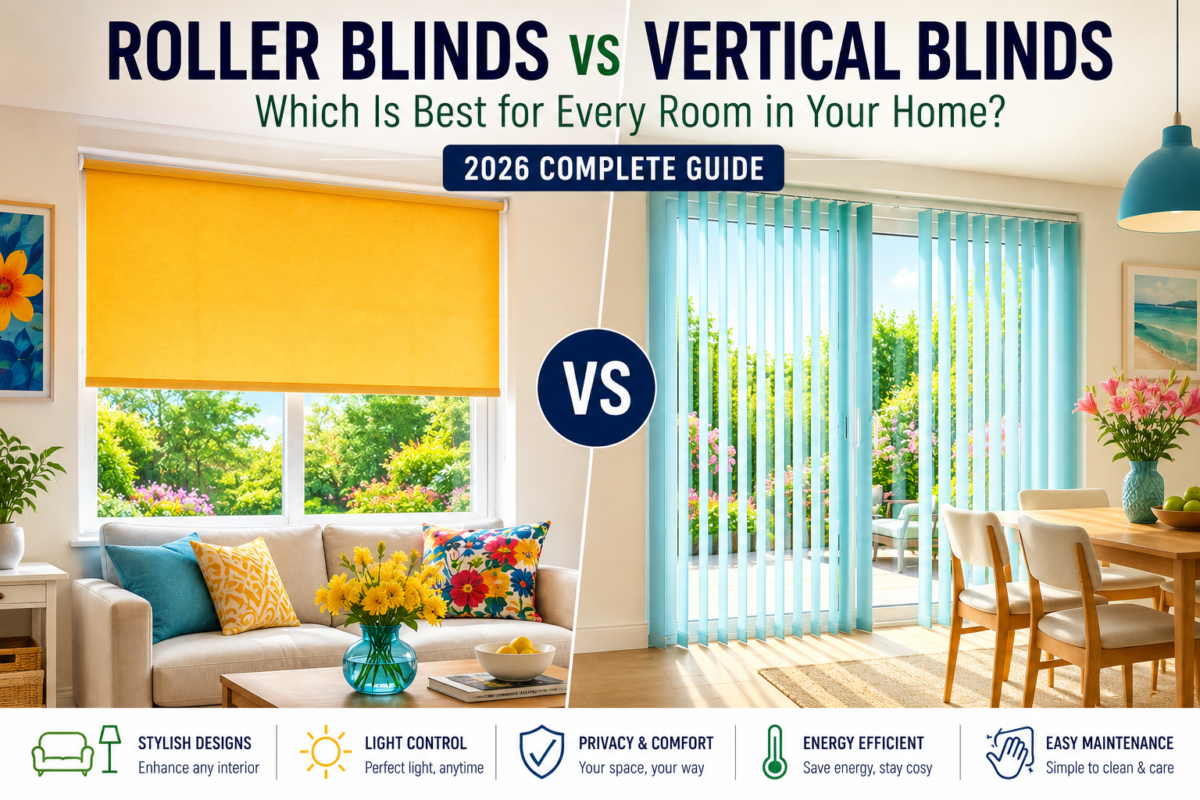
Roller Blinds vs Vertical Blinds: Which Is Best for Every Room in Your Home
Jun
Choosing the Right Window Blinds Matters More Than Ever

Window blinds have evolved from being simple window coverings into essential design features that influence comfort, energy efficiency, privacy, light control, and the overall appearance of a property. Whether you are renovating your home, furnishing a new build, upgrading a commercial property, or replacing outdated curtains, selecting the right blinds is an investment that affects every room for years to come.
Among the most popular choices throughout Ireland and the United Kingdom, roller blinds and vertical blinds consistently remain at the top of homeowners’ wish lists. Both offer distinct advantages, modern styling, practical functionality, and exceptional value. However, deciding between them is not always straightforward.
The best option depends on several important factors, including the size of your windows, the room’s purpose, the amount of natural light you require, your privacy needs, maintenance preferences, insulation requirements, and interior design style.
This comprehensive 2026 guide explains the differences between roller blinds and vertical blinds in detail, helping you make the right decision for every room in your home while maximising comfort, appearance, and long-term value.
Understanding Roller Blinds
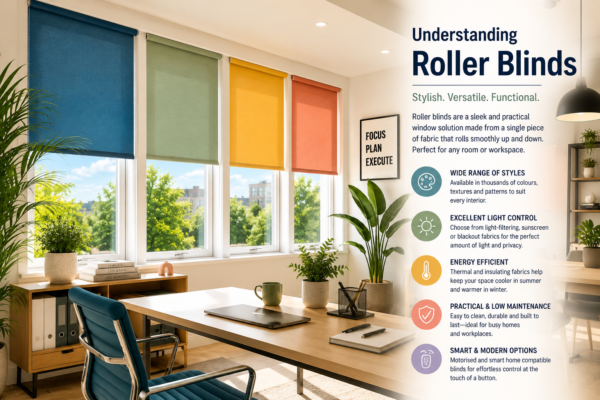
Roller blinds are among the most versatile and contemporary window furnishing solutions available today. Constructed from a single piece of high-quality fabric that rolls neatly around an aluminium tube, they offer a sleek appearance with minimal visual clutter.
Available in thousands of colours, textures, patterns, and performance fabrics, roller blinds can complement virtually every interior design style, from traditional family homes to luxury apartments and modern office spaces.
Today’s premium roller blinds are available in light-filtering, sunscreen, blackout, moisture-resistant, thermal, fire-retardant, and motorised options, making them suitable for almost every environment.
Their clean lines and compact design make them particularly attractive for homeowners seeking a modern aesthetic without sacrificing practicality.
Understanding Vertical Blinds
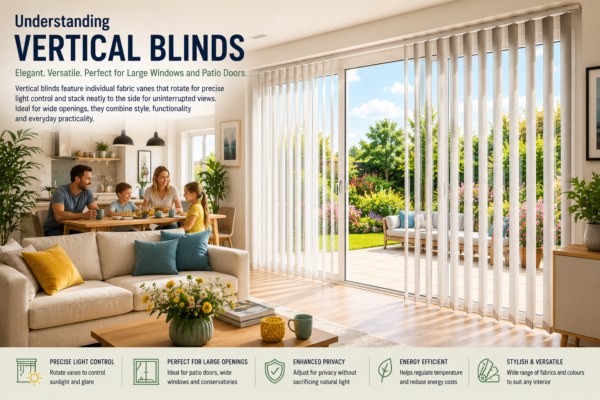
Vertical blinds have been trusted by homeowners and businesses for decades because of their outstanding versatility and exceptional light management capabilities.
Unlike roller blinds, vertical blinds consist of individual fabric vanes that rotate to control sunlight while also drawing neatly to one side when fully opened.
Modern vertical blinds bear little resemblance to the older office-style versions that many people remember. Today’s collections include luxurious textured fabrics, elegant woven materials, blackout options, moisture-resistant finishes, and premium designer colours that integrate beautifully into contemporary homes.
They remain one of the most practical solutions for wide windows, patio doors, conservatories, and large glazed areas where precise light control is essential.
Comparing Appearance and Interior Design
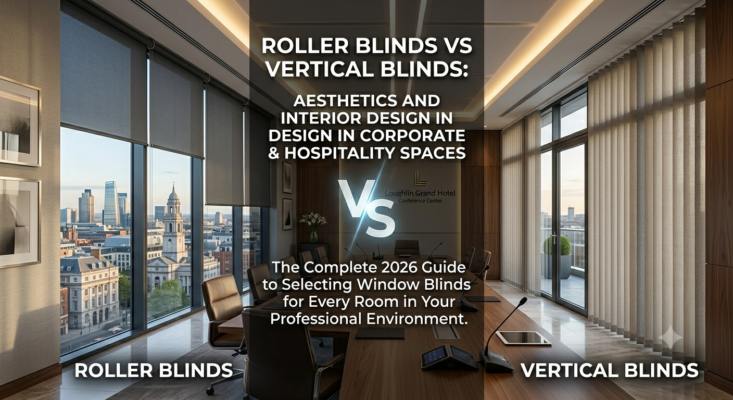
One of the first considerations for homeowners is aesthetics.
Roller blinds deliver a streamlined appearance that suits minimalist interiors exceptionally well. Their uninterrupted fabric surface creates a clean architectural look that works beautifully in kitchens, bedrooms, bathrooms, home offices, and living spaces.
Vertical blinds create a more structured visual effect through evenly spaced fabric louvres. While traditionally associated with commercial buildings, modern fabrics have transformed vertical blinds into sophisticated window treatments capable of complementing both classic and contemporary interiors.
For homeowners seeking understated elegance, roller blinds often provide the more discreet finish. For larger glazing areas requiring visual balance, vertical blinds frequently become the superior design choice.
Light Control and Privacy Performance
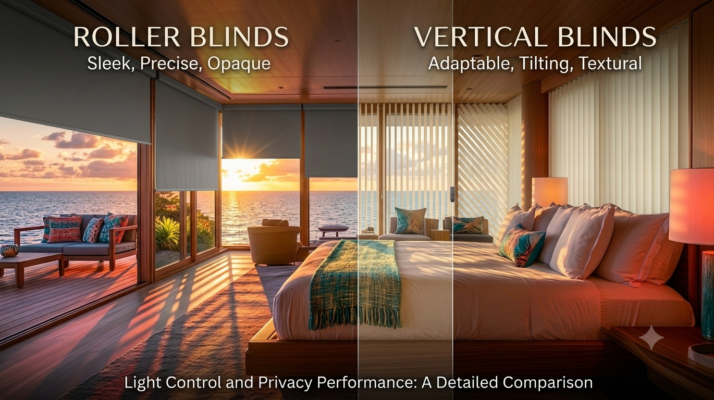
Light control is one of the most important factors when selecting new blinds.
Roller blinds allow homeowners to choose fabrics specifically designed for different lighting requirements. Sunscreen fabrics reduce glare while maintaining outside views. Light-filtering fabrics soften natural daylight without darkening the room excessively. Blackout fabrics provide near-total darkness, making them particularly suitable for bedrooms, nurseries, and media rooms.
Vertical blinds offer even greater flexibility throughout the day because each vane rotates independently. This allows occupants to direct incoming sunlight precisely where required while maintaining privacy from neighbouring properties.
In rooms where sunlight changes throughout the day, vertical blinds provide an exceptionally adaptable solution that is difficult for most other blind systems to match.
Energy Efficiency and Insulation
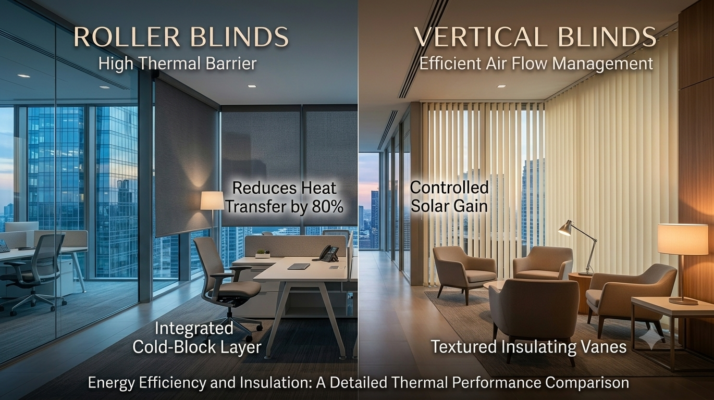
As energy prices continue to rise in 2026, homeowners increasingly view window blinds as an important component of home insulation.
Well-manufactured roller blinds fitted close to the window frame help minimise heat loss during colder months while reducing unwanted solar heat gain throughout summer.
Thermal-backed fabrics further improve insulation performance, contributing to lower heating costs and enhanced indoor comfort.
Vertical blinds also assist with temperature regulation, particularly on large glazed areas where excessive solar gain may occur. Their adjustable vanes enable homeowners to manage sunlight efficiently without completely blocking natural daylight.
Selecting premium performance fabrics can significantly improve year-round energy efficiency regardless of which blind style is chosen.
Maintenance and Cleaning Requirements
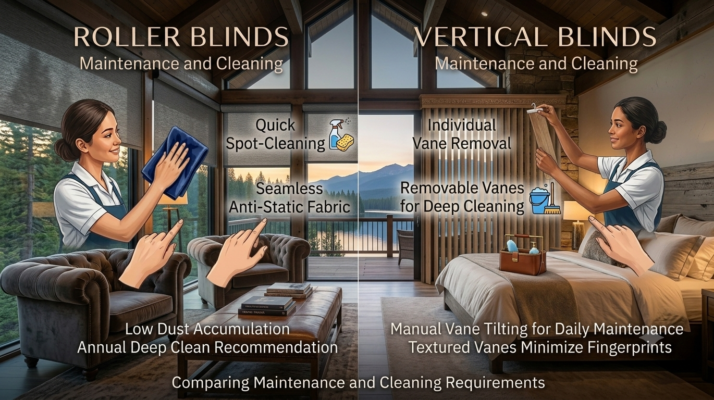
Ease of maintenance is another important consideration, particularly for busy households.
Roller blinds generally require very little upkeep. Most fabrics can be maintained using regular dusting or gentle vacuuming with a soft brush attachment. Occasional spot cleaning is normally sufficient to preserve their appearance.
Vertical blinds require slightly more maintenance because each individual vane may collect dust over time. Fortunately, many modern fabrics are treated with anti-static coatings that reduce dust accumulation, while removable vanes make deep cleaning considerably easier than previous generations of products.
Both systems offer excellent longevity when manufactured using premium materials and installed professionally.
